
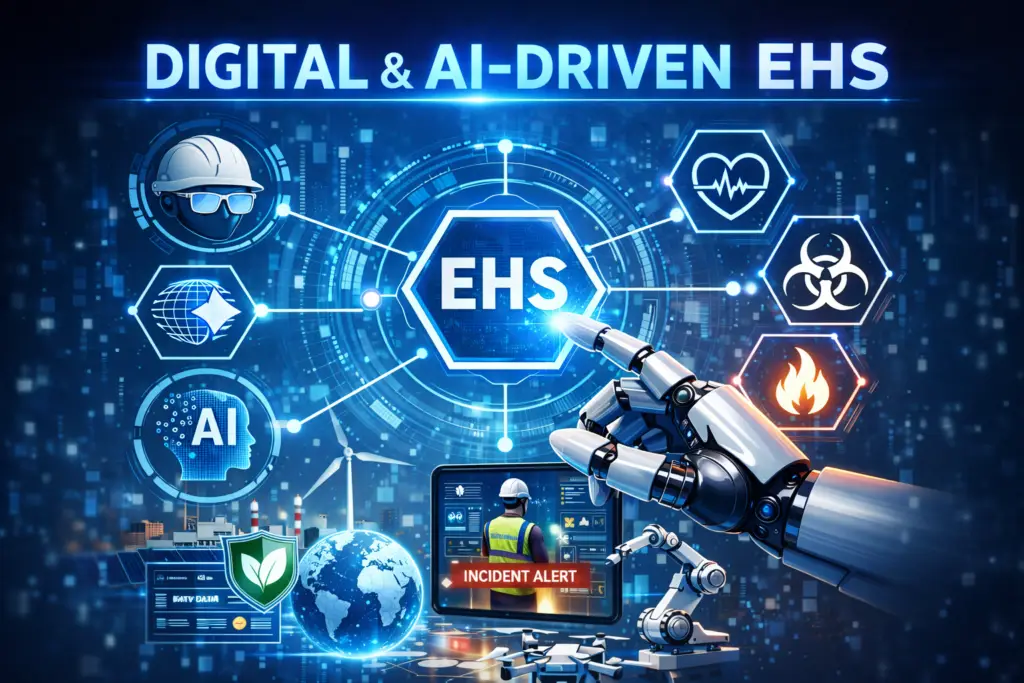
Digital and AI-driven EHS means using software, data, sensors, and machine learning to move HSE from reactive compliance to predictive, real-time risk management tightly linked with ESG performance.
What “digital EHS” means ?
Digital EHS typically refers to platforms and tools that centralize incidents, audits, inspections, risk assessments, and compliance tracking into a single system instead of Excel and paper. These systems integrate with ERP/HR/maintenance (CMMS/EAM) to automate workflows, notifications, and reporting for EHS and sustainability.
Key elements include:
Cloud and mobile EHS software for real-time reporting and approvals (incident, unsafe act, PTW, checklists).
Dashboards and analytics to track leading/lagging indicators, corrective actions, and ESG metrics.
Integration with HR, procurement, and inventory so PPE, training, contractor status, and asset integrity data are linked to safety performance.
AI use cases in EHS
AI is being embedded into EHS platforms as “EHS 4.0”, combining sensors, big data and machine learning. Core applications include:
Predictive analytics that use historical incidents, near-misses, and sensor/behavioral data to predict high-risk situations and suggest controls before an event.
Real-time risk monitoring using IoT (gas, dust, temperature, noise, ergonomics, fatigue wearables) with AI models raising alerts when patterns show elevated risk.
Automated compliance and incident analytics, where AI helps classify events, identify root-cause patterns, and monitor ongoing adherence to standards and regulations.
Computer vision is another fast-growing area: tools like Protex AI use cameras plus AI to detect unsafe acts (no PPE, line-of-fire, vehicle–pedestrian conflicts) continuously and feed proactive insights to EHS teams.
2025 trends and ESG link
Global surveys in 2025 show organizations prioritizing AI-enabled EHS software, mobile-first solutions, and IoT integration to improve safety outcomes and regulatory/ESG reporting. Digitizing EHS data allows more accurate, auditable ESG disclosures because incident rates, occupational health programs, and environmental metrics are captured and validated in one system.
For a role like Head–HSE/ESG, practical priorities usually include:
Implementing a cloud/mobile EHS platform (incident, inspections, actions, legal register, training) as the backbone.
Piloting AI in one or two high-value areas first, such as predictive incident analytics on construction projects or AI-based unsafe act detection in high-risk zones.
Connecting EHS data into ESG dashboards so safety, health, and environment indicators feed directly into annual ESG reports and investor disclosures.